.svg)

7 Best Enterprise SMS Solutions: Risks, 5-Minute Decision Matrix & Top Picks


CTIA’s 2025 Annual Survey Highlights report says Americans exchanged nearly 2.2 trillion SMS and MMS messages in 2024. Proof that texting is still one of the most dependable channels for getting information seen fast. But for enterprises, “sending texts” isn’t the hard part.
The real challenge is scaling business messaging without running into deliverability issues, opt-outs, or compliance problems that quietly reduce reach.
In this guide, we’ll clarify what enterprise SMS solutions actually mean in 2026, then break down the buying criteria that matter at scale.
Quick Take:
- The Four Problems: Deliverability, compliance, consent, and governance decide whether SMS stays reliable at scale.
- The 5-Minute Decision Matrix: Match your primary use case to the right solution type before booking demos.
- The Solutions List: Compare top enterprise SMS options using “does well vs watch-outs,” starting with Udext.
- Udext Outcomes: Faster workforce reach with SMS-first updates, two-way replies, and follow-through tools.
- Closing Guidance: Set monthly metrics and ownership early so enterprise messaging doesn’t drift or degrade.
What Enterprise SMS Solutions Means In 2026
“Enterprise SMS” isn’t one product type. It’s an umbrella term that covers different messaging systems built for different jobs, some are developer tools, some are delivery infrastructure, some are campaign platforms, and some are designed for internal workforce communication.
If you don’t pick the right category first, you’ll end up comparing tools that solve completely different problems.
- Enterprise SMS API / CPaaS: Built for product teams to send transactional alerts, OTP/2FA, and app notifications through APIs.
- Enterprise SMS Gateway / Routing: Built for scale and delivery performance—throughput, routing quality, uptime, and carrier-grade reliability.
- Sms Marketing Platforms: Built for campaigns—segmentation, scheduling, consent workflows, and opt-in/opt-out management (typically customer messaging).
- Workforce/Internal Sms Platforms: Built for HR/ops to reach deskless employees with updates, reminders, and feedback loops without app friction.
The Hidden “Enterprise” Requirements Most Buyers Miss
- Compliance isn’t Optional In The US: If you’re sending A2P texts from 10DLC numbers, you’ll run into brand/campaign registration requirements that tie directly to deliverability outcomes.
- Consent And Opt-Out Handling Needs To Be Built-In: CTIA best practices call for clear opt-out instructions and honoring common opt-out language (like “stop,” “unsubscribe”).
- Scale Means Governance: At enterprise size, multiple teams will want to send messages—so you’ll want controls around who can send, what templates exist, and reporting.
Once you know the category, the real question becomes whether your messages will keep landing reliably as volume, teams, and rules scale up.
The Four Problems Enterprises Actually Pay For
Enterprise SMS decisions usually look like a vendor comparison, but the real cost shows up later, when messages don’t land consistently, compliance work piles up, opt-outs spike, or too many teams start texting without control.
These are the four problems enterprises actually pay to solve, because they determine whether SMS stays reliable as volume and complexity grow.
Deliverability Is A System, Not A Send Button
At enterprise scale, SMS doesn’t usually fail with obvious errors. It fails through filtering, delays, and uneven delivery across carriers, especially when volume spikes or messaging patterns repeat.
That’s why deliverability is an operating system you manage, not a one-time “send” action.
What To Ask The Vendors
- What deliverability visibility do we get: carrier-level outcomes and failure reasons, or just “sent/delivered”?
- What throughput can you support, and what happens to delivery time during peak spikes (queueing/priority rules)?
- How do you help prevent carrier filtering as we scale (guidance, controls, monitoring)?
- If we send globally, how do you manage routing differences by region/operator?
What To Measure Internally
- Delivery rate trends by carrier/region
- Time-to-deliver for critical messages (median + worst-case)
- % of messages queued/delayed during spikes and average delay time
- Top recurring failure reasons (invalid/unreachable/blocked) and how fast you clean lists
Compliance And Registration Are Now Part Of Sms Operations
At enterprise scale, SMS is not “set up once and send.” Compliance work becomes part of daily operations. If you skip it, deliverability drops, programs get paused, and teams lose trust in the channel.
What To Ask The Vendors
- What compliance steps do you support for U.S. A2P messaging, including 10DLC brand and campaign registration?
- What do you need from us to complete registration fast (use case details, sample messages, opt-in proof)?
- How do you handle consent records and opt-out rules across campaigns and sender IDs?
- What audit trail do we get for “who sent what, when, and why”?
What To Measure Internally
- Registration status by use case (approved, pending, rejected)
- Consent proof coverage for each list or segment
- Opt-out compliance: time to suppress numbers after STOP-style requests
- Message templates in use and who approved them
{{see-udext="https://www.udext.com/symbols"}}
Consent And Opt-Out Handling Is Where Programs Break Quietly
Most enterprise SMS solutions don’t fail on technology. They fail when people feel surprised by messages. That shows up as opt-outs, complaints, and delivery filtering. Consent and opt-out handling keep the channel usable.
What To Ask The Vendors
- How do you capture and store consent proof (source, timestamp, and purpose)?
- Can we enforce opt-out keywords like STOP and suppress numbers automatically across all sends?
- Can we set frequency limits and quiet hours by audience or message type?
- How do you prevent different teams from texting the same person too often?
What To Measure Internally
- Opt-out rate by message type (alerts vs updates vs promotions)
- Replies that indicate confusion (“who is this?”, “stop texting me”)
- Opt-out handling speed and suppression accuracy
- Message frequency per recipient per week across teams
Governance And Reporting Become Mandatory At Scale
Once SMS spreads across HR, ops, support, and marketing, the risk isn’t just volume. It’s an inconsistency. Without governance, teams send conflicting messages, over-message recipients, and lose control of what’s being said in your name.
What To Ask The Vendors
- Can we control who can send, to whom, and for which use cases (role-based access)?
- Can we standardize templates and approvals for high-risk messages?
- Do you provide an exportable audit log of sends, replies, and outcomes?
- Can reporting be split by department, campaign, or location?
What To Measure Internally
- Who is sending SMS and how often (by team)
- Template usage and non-approved message patterns
- Response and resolution time for two-way threads
- Audit readiness: ability to trace sender → recipient → outcome for any message window
Also Read: Managing Enterprise-Wide Crises: Why Communication Is Key
With these constraints, “best platform” depends on your use case: OTP, customer messaging, or workforce messaging requires different infrastructure choices.
Choose The Right Enterprise SMS Solution In 5 Minutes
You don’t need ten demos to get to the right shortlist. Start with your primary use case and what “success” means for that program, then pick the category built for it. This decision matrix helps you choose fast, without mixing tools that solve different problems.
If you want the simplest shortlist, pick the row that matches your primary goal, then only compare vendors inside that same category.
Now that you know which category fits your use case, here’s a practical list of enterprise SMS solutions to evaluate in 2026.
Best Enterprise SMS Solutions In 2026
At enterprise scale, the “best” SMS solution is the one that matches your core use case and stays reliable as volume grows. Start with the platform that fits your audience and workflow. Then, validate deliverability visibility, compliance readiness, and reporting before you commit.
1. Udext
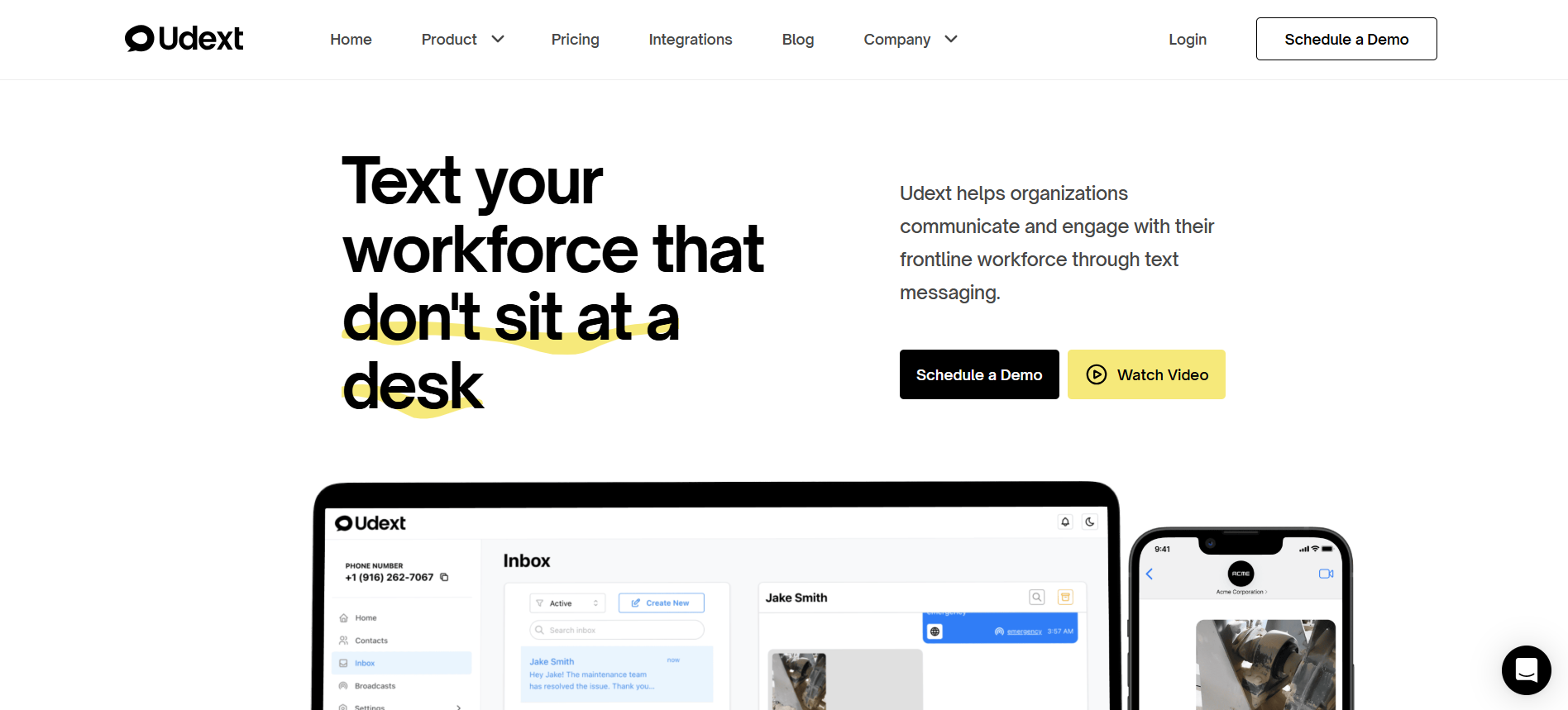
Udext is an SMS-based employee communication platform built to reach teams that don’t sit at a desk, with no apps and no downloads.
Best For
- HR and operations teams that need high-visibility internal messaging for deskless employees
- Workflows that depend on fast reads and responses, not portal logins
Services It Supports
- Employee Communication (two-way texting, reminders, workforce engagement)
- Employee Alerts (time-sensitive notifications and updates)
- Employee Intranet (SMS-based intranet access without apps or email)
- SMS Surveys And Polls (collect feedback and see responses in real time)
- Employee Signature Collection (send forms by text, collect legally binding signatures)
- SMS Newsletter (templates, drag-and-drop builder, analytics)
Want your messages seen in minutes, not days? Book a demo to see Udext’s SMS-first workforce messaging in action.
2. Twilio Programmable Messaging
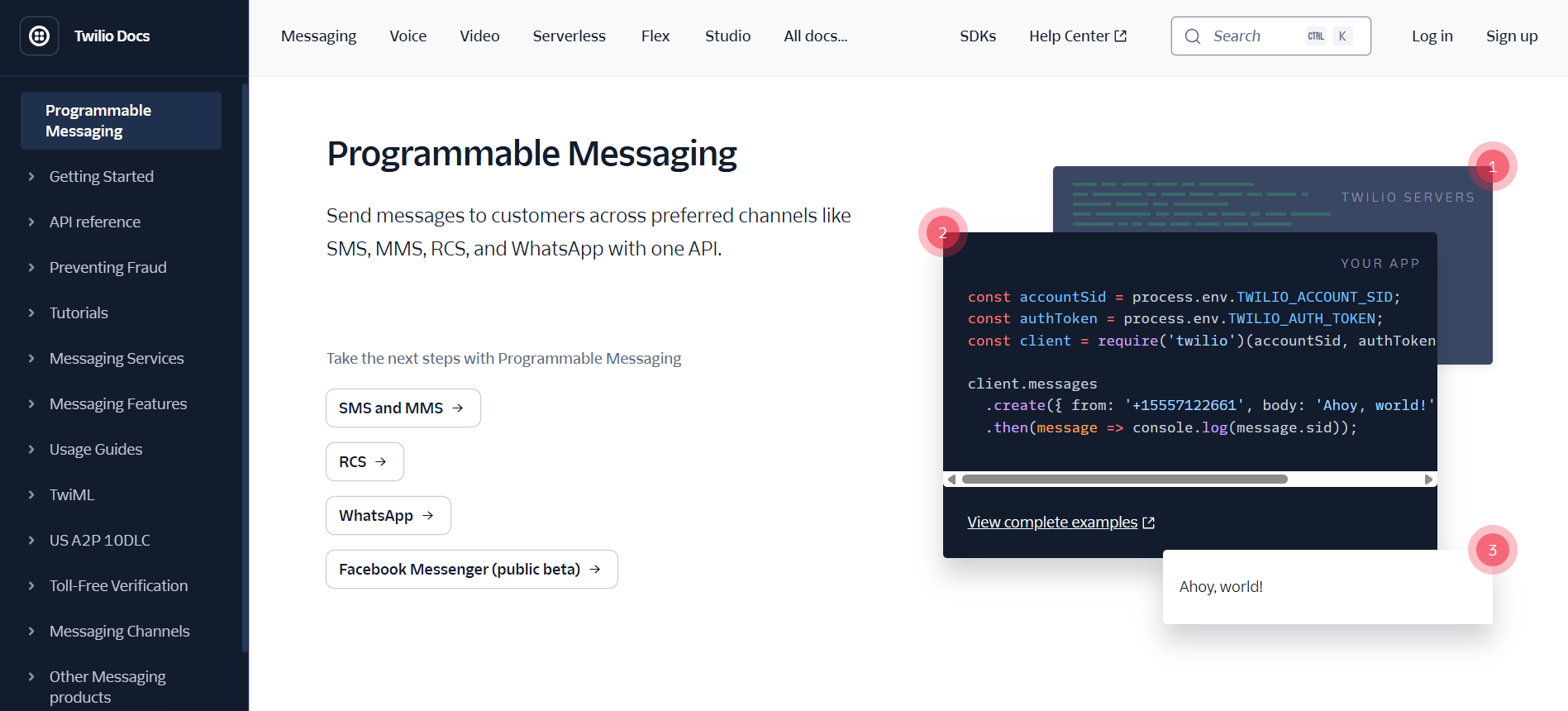
Twilio provides a programmable messaging API to send and receive transactional SMS/MMS and track message status through callbacks and delivery reporting.
Best For
- Product teams that need API-driven SMS for alerts and notifications
- Engineering-led workflows that require delivery status tracking
3. Infobip SMS API

Infobip offers a programmable SMS API to send and receive SMS, with delivery reports and message logs for visibility.
Best For
- High-volume SMS programs across multiple countries
- Teams that want delivery reports and message logging built into the API workflow
- Engineering teams integrating SMS into existing systems and triggers
- Enterprises that need a vendor positioned around global messaging connectivity
4. Sinch SMS API
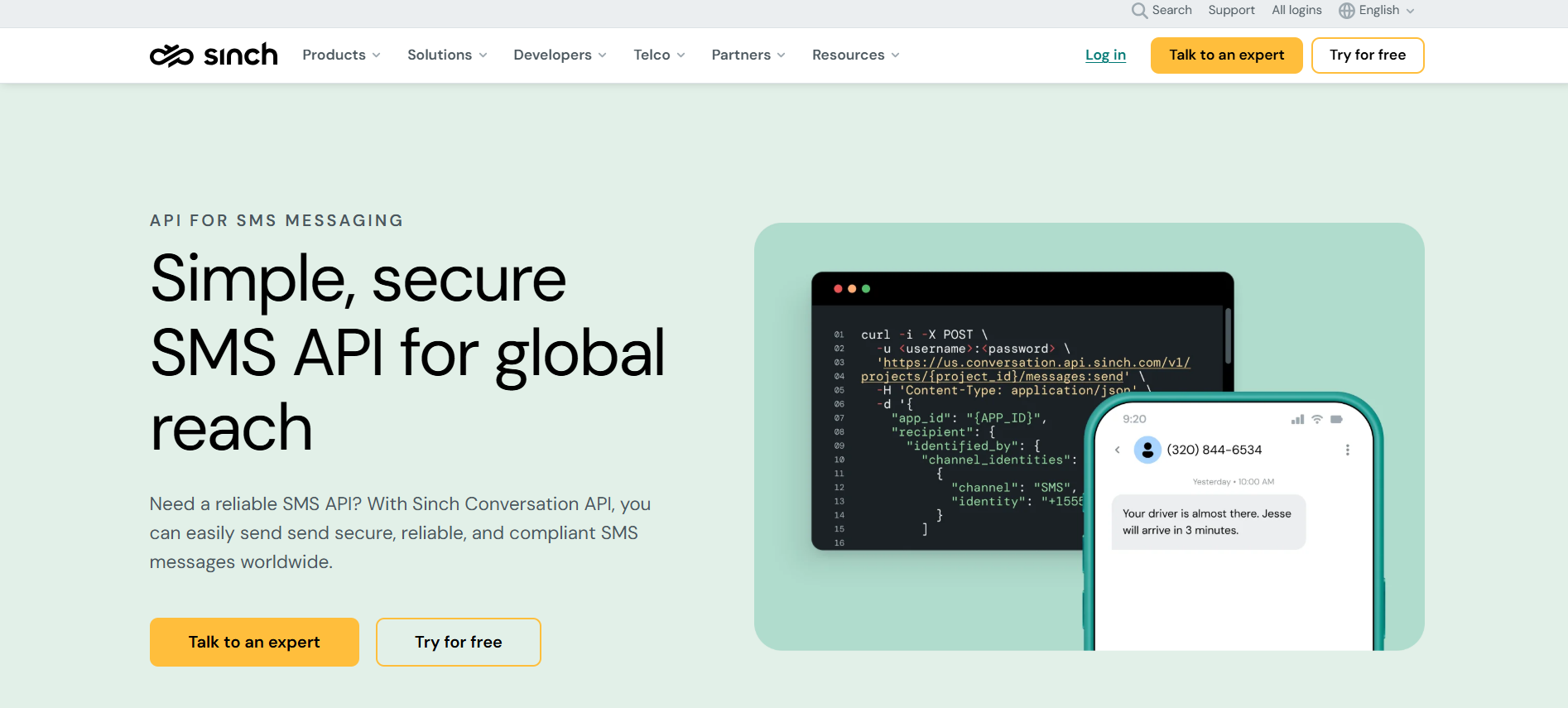
Sinch offers an SMS API designed for sending and receiving SMS at scale, with delivery tracking and an enterprise messaging focus.
Best For
- High-volume SMS programs that need reliable delivery controls
- Teams sending transactional messages and notifications via API workflows
- Enterprises that want delivery tracking and visibility as part of the core setup
5. Vonage SMS API

Vonage offers an SMS API to send and receive SMS globally, with delivery receipts and reporting options for tracking message status.
Best For
- Teams that want an SMS API for programmatic messaging at scale
- Programs that need delivery receipts (DLRs) to understand message outcomes
- Use cases where webhook-based status updates are important for operations
6. Bird (Formerly MessageBird) SMS API

Bird’s SMS API lets teams send and receive SMS through a REST API, and it supports delivery reports (DLRs) so you can track message status.
Best For
- Product teams that want API-led SMS sending and receiving
- Programs that need delivery status feedback via delivery reports
- Teams that want a vendor positioned around global SMS API coverage
7. Telnyx SMS API
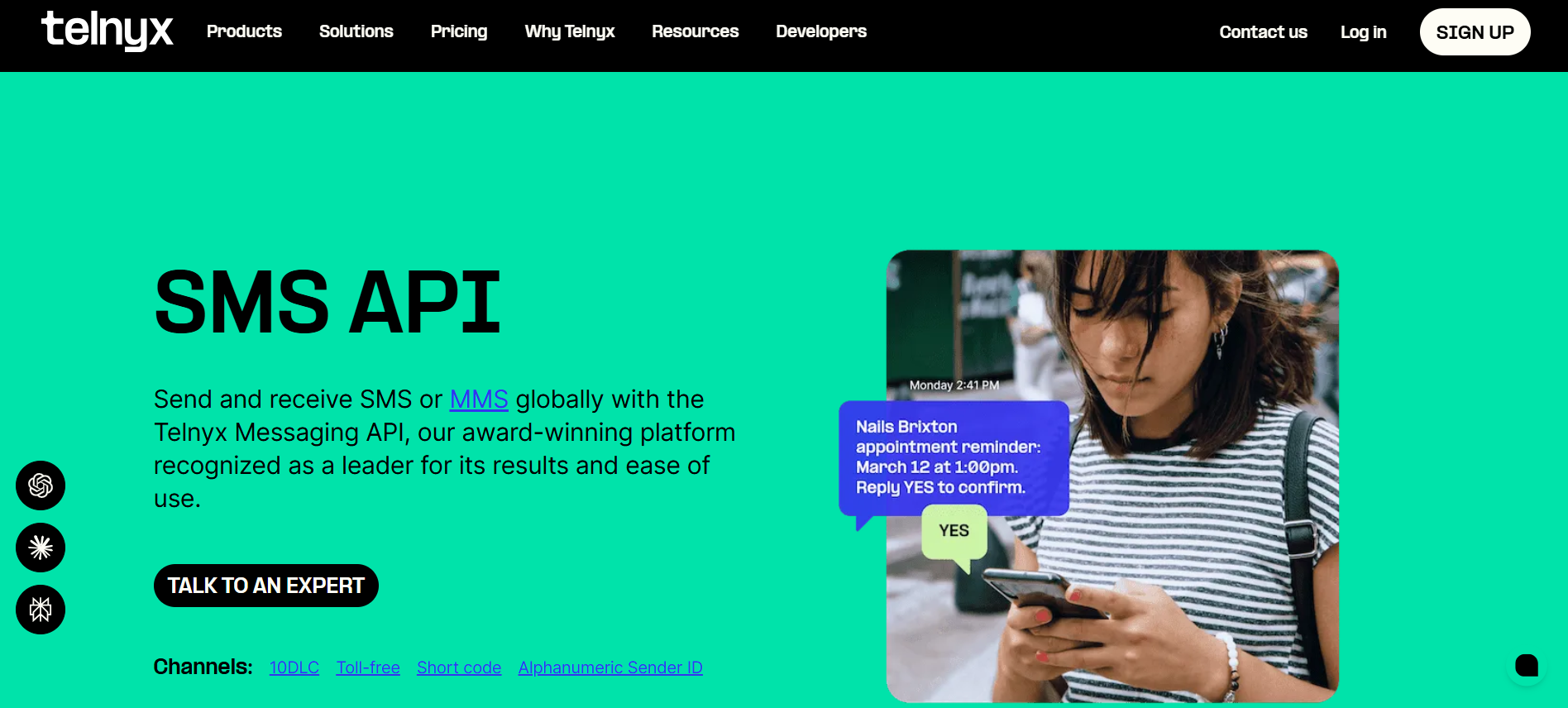
Telnyx offers an SMS/MMS messaging API for programmatic business messaging, with webhook-based inbound messaging and delivery-receipt handling.
Best For
- Product teams building API-driven SMS workflows
- Programs that need inbound SMS via webhooks
- Teams that want delivery receipts (DLRs) as part of the setup
Also Read: Top 10 Digital Workspace Platforms in 2026
If your priority is reaching deskless employees fast and keeping communication two-way, here’s what Udext looks like in real workforce outcomes.
How Udext Supports Enterprise SMS Messaging For Deskless Workforces
Udext focuses on one outcome: your message gets seen and acted on, even when employees don’t use email or corporate apps. It uses SMS to remove adoption friction (“no apps, no downloads”) and keep communication simple for frontline teams.
What This Looks Like In Real Outcomes
- Faster reach for time-sensitive updates: Udext positions SMS as a high-engagement channel (98% read in the first 10 minutes), which supports faster visibility for operational messages.
- Fewer “where do I find this?” moments: The employee intranet is designed to be accessible without apps or email, so policies and resources stay reachable when employees are on the move.
- Quicker issue resolution through replies: Udext is built around two-way text communication, so employees can respond in the same channel instead of waiting on portals.
- More complete safety and incident workflows: Employee Alerts support incident reporting via SMS and centralized incident logs, which helps teams respond and track consistently.
- Inclusive communication across languages: Udext highlights automatic translation into 100+ languages, helping multi-language workforces understand updates without extra steps.
- Less manual chasing for participation: Udext supports SMS surveys and feedback collection, useful when you need quick responses from distributed teams.
Want your workforce updates seen fast, without app logins? Reach out to us to see Udext’s SMS-first employee messaging in action.
Conclusion
Enterprise texting fails when delivery, consent, and control get treated as “later.” The pain point is simple: messages stop landing consistently, opt-outs rise, and teams lose trust in the channel.
Keep your program tight: pick the right category first, standardize consent and opt-out handling, and review deliverability and governance metrics every month.
If your priority is internal workforce reach, book a demo to see how Udext supports enterprise SMS solutions for deskless teams.
FAQs
1. How do I stop different teams from texting employees with conflicting updates?
Set one owner per use case, lock templates, and require approvals for high-impact messages. Keep a single reporting view so overlaps show up fast.
2. What’s the fastest way to spot deliverability issues before they become a bigger problem?
Watch delivery and delay trends by carrier/region and compare them week over week. Sudden dips or longer delays usually show trouble early.
3. How do we keep SMS from feeling spammy to employees?
Use a clear message purpose, a predictable cadence, and only send what drives action. Bundle low-priority updates and avoid back-to-back nudges.
4. How should we handle multilingual communication without rewriting everything?
Use a platform that supports automatic translation and keep messages short and literal. Avoid slang and long sentences that translate poorly.
5. What’s the most common mistake when scaling enterprise SMS from pilot to rollout?
Letting too many people send messages without rules. Governance, consent handling, and reporting need to be set before volume increases.
Need to improve your internal comms? Take a look at Udext!
"Out of the box, Udext has everything you need to elevate your internal communication. It’s incredibly easy to set up and use, with a straightforward interface and great customer support"
John D.
Director of HR at Apex Manufacturing